
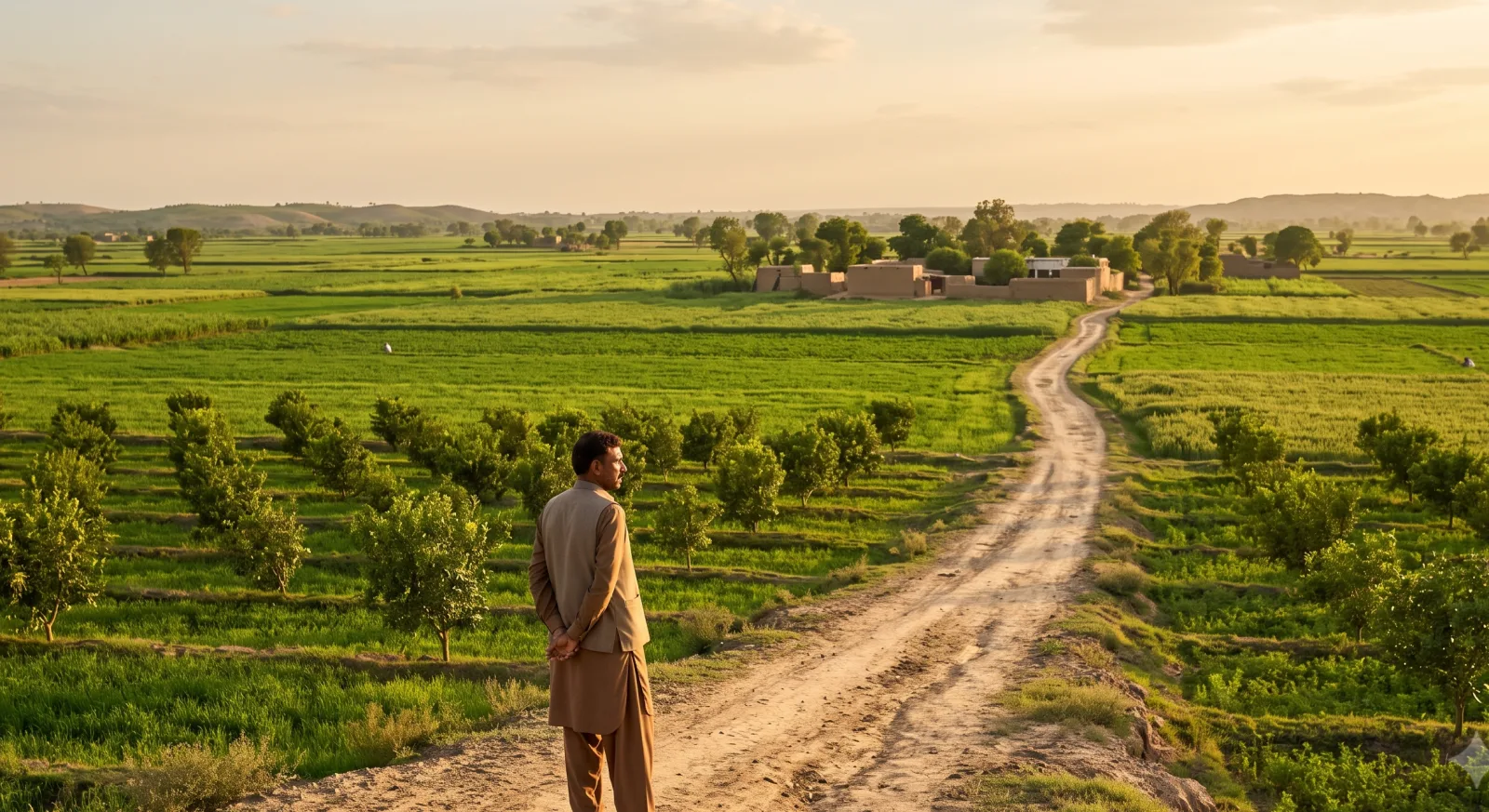
Buying agricultural land in Pakistan is safe and profitable if you follow one golden rule: verify the record before you pay. In short, the process is simple. Confirm the seller’s ownership through the land record (the Fard, or the optional Green Property Certificate), physically visit the land, sign a written agreement, register the sale deed, and complete the mutation (Intaqal) in your name. This guide walks you through every step, the documents you need, the real costs, and the red flags that protect you from fraud.
Key Takeaways
- Never pay full price before verifying the Fard (record of ownership) from the Arazi Record Center or the PLRA website.
- The Fard is valid for property transactions. The Green Property Certificate, issued by the Punjab Land Records Authority, was made mandatory on July 1, 2026, but the PLRA withdrew that requirement around July 11, 2026, so it is now optional.
- You are not the legal owner until the Intaqal (mutation) is recorded in your name, no matter how much you have paid.
- Punjab reduced stamp duty to a uniform 1 percent on immovable property in 2026, which has lowered transaction costs for rural land. Always confirm current rates at the time of purchase.
- Buying through a documented, registered company with clear land titles removes most of the risk for first time buyers.
Why Agricultural Land Is Worth Buying
Agricultural land near growing cities like Lahore has historically delivered strong long term appreciation, and unlike a plot file, it is a tangible asset you can see, walk on, and earn from. Income can come from cultivation, leasing to farmers, orchards, or managed projects such as agroforestry, where trees like teak and eucalyptus plus products like cold pressed oils generate returns while the land itself appreciates. It is also one of the most comfortable asset classes for investors who want a tangible, asset-backed investment, because the return comes from a real asset and real produce.
If you want to understand the managed farming model in detail, read our guide on agroforestry investment in Pakistan.
Before You Start: Understand These 5 Terms
| Term | What it means |
|---|---|
| Fard (Fard e Malkiat) | The official extract of the land record showing who owns the land. Issued by the Arazi Record Center. |
| Khasra and Khatooni | Numbers that identify the exact parcel and its entry in the village record, including boundaries and area. |
| Registry (Sale Deed) | The legal document of sale, registered at the Sub Registrar office. |
| Intaqal (Mutation) | The update of the government land record that transfers ownership into your name. This is the step that makes you the legal owner. |
| Green Property Certificate (GPC) | The new digital ownership certificate from the Punjab Land Records Authority that is replacing the Fard. It was made mandatory on July 1, 2026 and the requirement was withdrawn around July 11, 2026, so the Fard is valid and the GPC is optional. |
Step by Step: How to Buy Agricultural Land Safely
Step 1: Shortlist the land and visit it physically
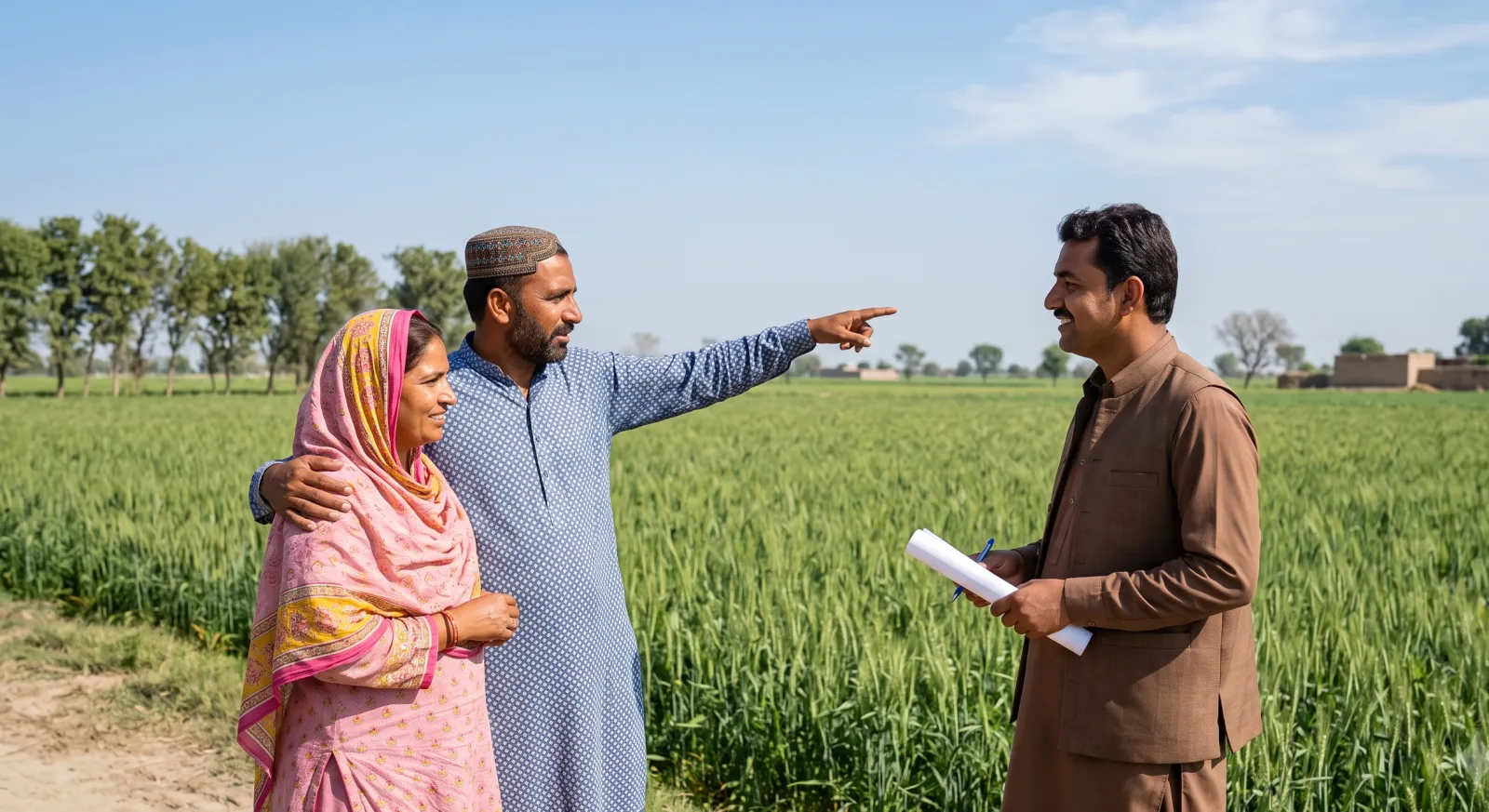
Photos and maps are not enough. Visit the land, walk the boundaries, and talk to neighbours. Check road access, water availability (canal or tube well), soil condition, and electricity. For areas near Lahore, locations in District Kasur, and along Bedian Road and Raiwind Road, are popular for both farming and farmhouse use.
Step 2: Get the Fard and verify ownership
Ask the seller for a fresh Fard, then verify it yourself. You can visit the nearest Arazi Record Center, or check the record online through the Punjab Land Records Authority (PLRA) portal at punjab-zameen.gov.pk. Match the seller’s CNIC with the name on the record, confirm the Khasra numbers, and check the total area. If the land has multiple owners (shared inheritance is common in rural Punjab), every legal owner must consent to the sale.
Step 3: Check for disputes, loans and restrictions
Ask the Arazi Record Center whether the land has any pending mutation, court stay order, or bank charge against it. Confirm the land is actually classified as agricultural and check whether any housing scheme, road project, or government acquisition affects it. If the area requires a No Objection Certificate, confirm it exists.
Step 4: Agree the price and sign a written Bayana (token agreement)
Once satisfied, negotiate the price per marla, kanal or acre and sign a written agreement (Iqrar Nama) that records the total price, the token amount paid, the remaining payment schedule, and the final transfer date. Pay the token through a bank instrument, not cash, and keep receipts. Never hand over large cash amounts on a verbal promise.
Step 5: Prepare the documents
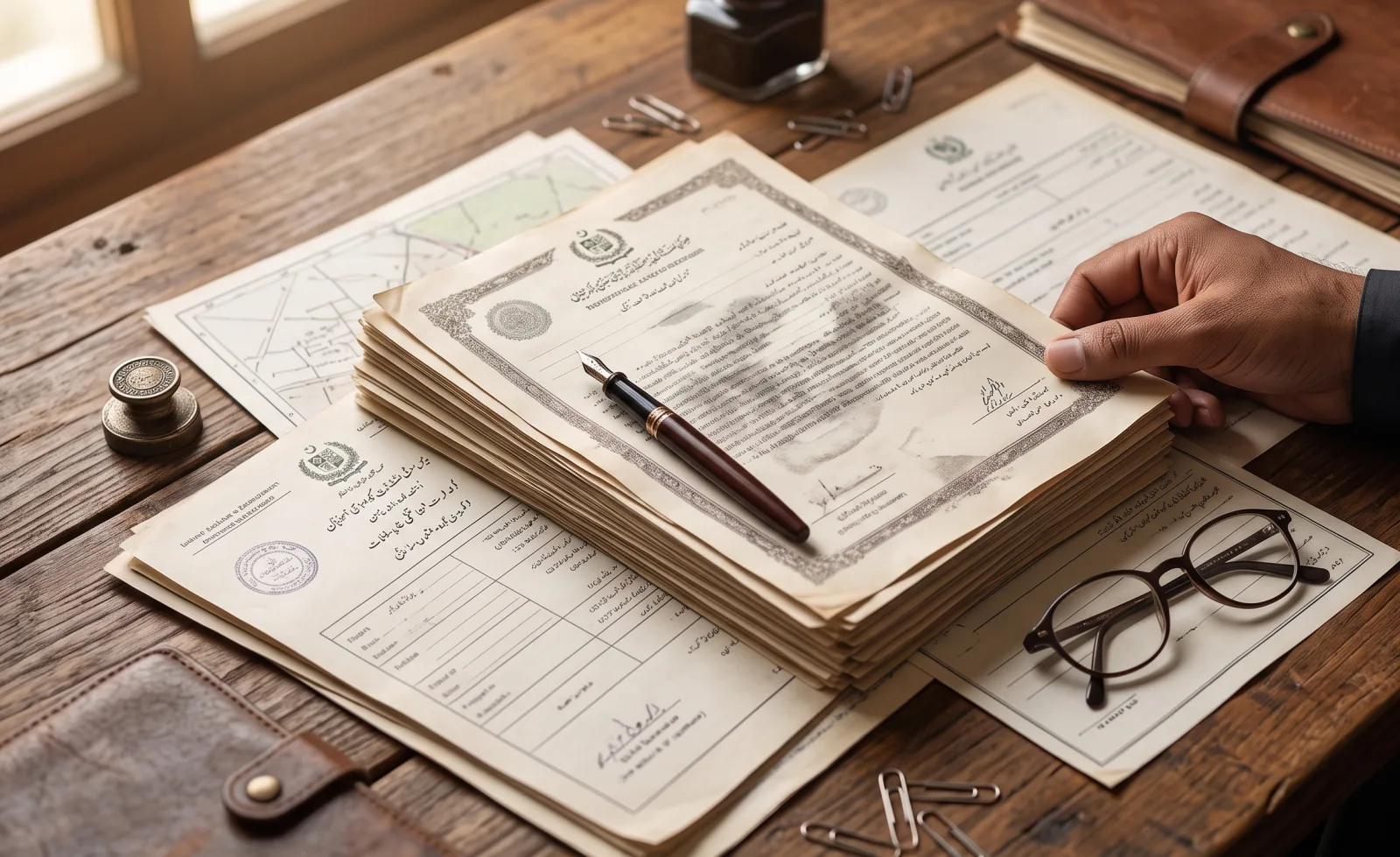
A typical file for an agricultural land purchase includes:
- Fresh Fard of ownership (or a Green Property Certificate, which is optional)
- CNIC copies of buyer and seller (all owners if inherited)
- The written sale agreement
- Khasra plan or Aks Shajra (parcel map) where needed
- NOC if applicable in that area
- Photographs and biometric verification at the time of transfer
Step 6: Pay the government fees and taxes
Costs change with government budgets, so always confirm current rates before the transfer. As a guide for 2026:
| Cost | Typical rate (verify at purchase) |
|---|---|
| Stamp duty (Punjab) | 1 percent of recorded value (made uniform for urban and rural property in 2026) |
| Registration fee | About 1 percent |
| Mutation (Intaqal) fee | Fixed fee at the Arazi Record Center |
| Advance income tax (FBR) | Applies on purchase under section 236K, with a higher rate for non filers. Confirm the current rate from FBR or your dealer. |
| Green Property Certificate | A fixed PLRA fee. See our Green Property Certificate guide for current details. |
Step 7: Register the transfer and complete the Intaqal
For rural agricultural land in Punjab, the transfer is usually executed at the Arazi Record Center, where both parties appear, biometric verification is done through NADRA, and the mutation (Intaqal) is entered. For urban or scheme land, a sale deed is registered at the Sub Registrar office first. Either way, remember the rule: until the Intaqal is recorded in your name, the land is not legally yours.
Step 8: Collect your proof of ownership
After the mutation is sanctioned, obtain your updated Fard showing your name, and apply for your Green Property Certificate. The GPC process includes identity verification, a field survey of the parcel, verification from neighbouring owners, and a public notice period, after which the certificate is issued. Keep digital and physical copies of everything.
The Green Property Certificate: Optional Since July 11, 2026
Punjab is retiring its centuries old manual Fard system. The Green Property Certificate, issued by the Punjab Land Records Authority, is a verified digital certificate that confirms ownership, possession and the legal status of a property in one document. The rollout started with Sahiwal in early 2026 and extended to more districts through the year. The Fard is valid for property transactions. The Green Property Certificate was made mandatory on July 1, 2026, but the PLRA withdrew that requirement around July 11, 2026, so it is now optional. For buyers this is good news: stronger proof, fewer disputes, and a document banks accept more easily.
Red Flags: How to Avoid Land Fraud
- The seller cannot produce a fresh Fard, or delays showing the record.
- The price is clearly below market. In land, a deal that looks too good usually is.
- Multiple heirs own the land but only one is signing.
- You are pressured to pay large amounts in cash, quickly, without paperwork.
- The “agent” has no office, no track record, and no references.
- The land is promised as “soon to be converted” into a scheme or society without any approval documents.
The simplest protection is to buy from a documented, registered company with clear titles, written agreements and a physical office you can visit.
An Easier Path: Managed Agricultural Land
If you want the benefits of agricultural land without handling farmers, water and crop decisions yourself, a managed model is worth considering. At Jungle Dunia we offer agroforestry farmland in District Kasur with clear documentation, Registry and Intaqal in the buyer’s name, and professional farm management including tree plantation. The land is registered in your name, and everything the trees produce is 100 percent yours to keep or sell, with optional low cost processing only if you choose it. You can also browse our current plots, houses and farmhouse listings near Lahore or contact us to plan a site visit.
Frequently Asked Questions
Can anyone buy agricultural land in Pakistan?
Any Pakistani citizen can buy agricultural land. Overseas Pakistanis can also buy, and NADRA biometric verification can be arranged for them. Some border areas and specific zones have restrictions, so confirm locally.
What is the difference between Registry and Intaqal?
The Registry (sale deed) is the document of the sale itself. The Intaqal (mutation) is the update of the government land record that makes you the legal owner. You need the mutation completed, not just the registry.
How do I verify land records online in Punjab?
Use the Punjab Land Records Authority portal at punjab-zameen.gov.pk, or visit any Arazi Record Center with the Khasra number and the seller’s CNIC details.
What is a Fard and is it still valid?
A Fard is the extract of the ownership record, and it is valid for transactions. Punjab introduced the Green Property Certificate as a stronger alternative and made it mandatory on July 1, 2026, but the PLRA withdrew that requirement around July 11, 2026, so the certificate is now optional.
How much tax do I pay when buying agricultural land in Punjab?
As of 2026, stamp duty in Punjab is a uniform 1 percent, registration is about 1 percent, plus a fixed mutation fee and FBR advance tax that depends on your filer status. Rates change with budgets, so verify before the transfer.
What is the minimum size of agricultural land I can buy?
There is no single legal minimum for general purchase. A managed project makes it simpler to start. Jungle Dunia agroforestry farmland is available in 1 Kanal and 2 Kanal plots, registered in your name.
Is agricultural land a safe, tangible investment?
Yes. Land is a tangible, asset-backed investment, and income from cultivation, lease or produce comes from real output. This is one reason farmland stays popular with long-term investors.
Disclaimer: This guide is general information, not legal advice. Fees, taxes and procedures change with government policy. Always verify current requirements with the Punjab Land Records Authority, the Board of Revenue, or a qualified lawyer before any transaction.