
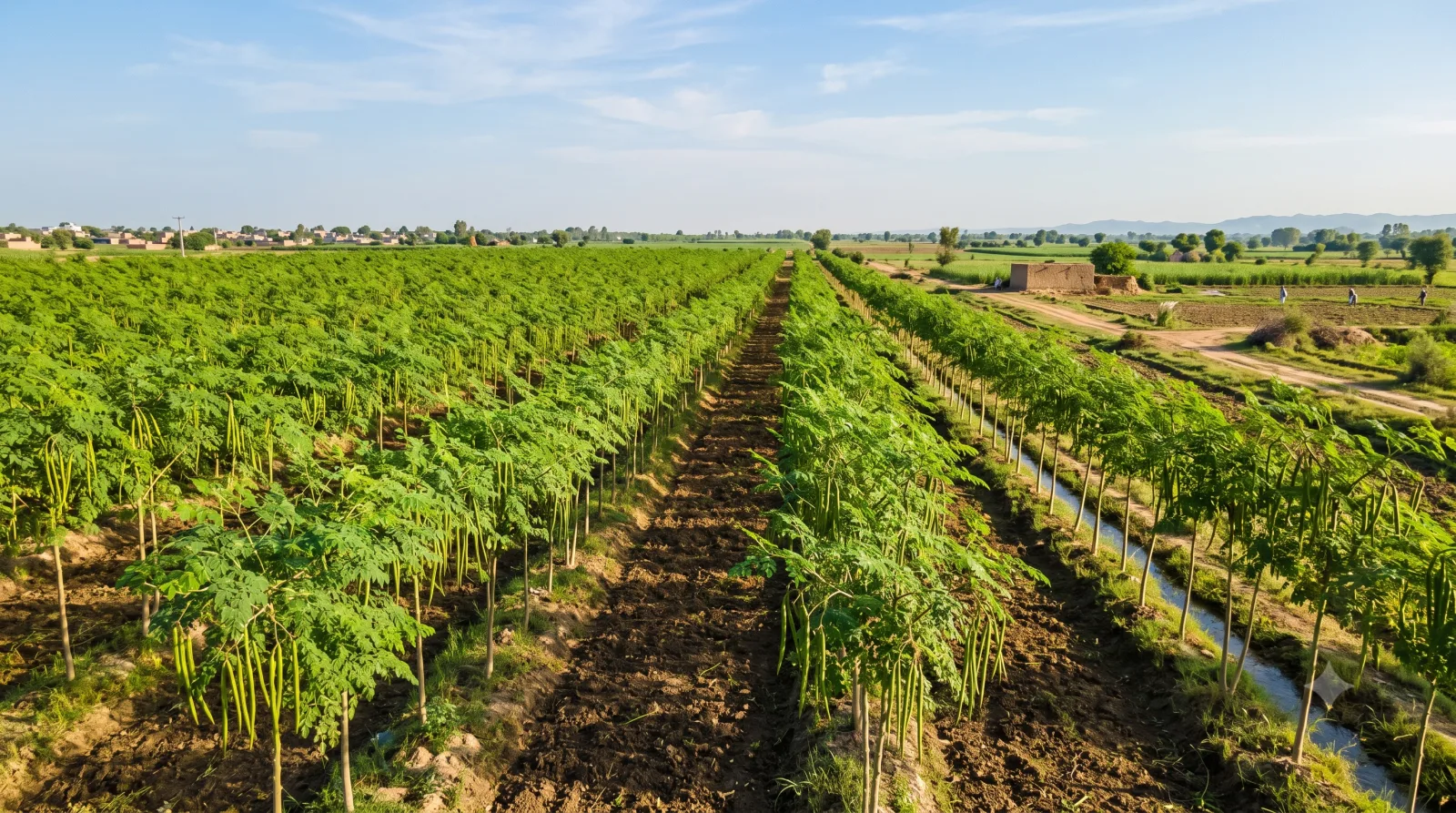
Moringa, known in Urdu as sohanjna, is one of the fastest paying trees an investor can plant in Pakistan. It grows quickly, needs little water, and starts producing within the first year. This guide gives you the full picture: how long it takes, what it produces, realistic income in Pakistani rupees, what it needs to grow, and who it suits best, so you can decide if moringa is the right tree for your plot.
Key Takeaways
- Moringa is a fast growing, drought resistant tree native to the sub Himalayan region, including Punjab, so it suits our climate.
- You can begin harvesting leaves within the first year, and the tree reaches steady production by year two to three, much faster than timber trees that take 8 to 12 years.
- It earns from several products at once: leaves and leaf powder, seed oil, seeds and pods, and livestock fodder.
- The real profit is in value addition. Fresh leaves sell cheap, but dried leaf powder retails around PKR 2,000 to 4,000 per kg and moringa oil is a premium product in Pakistan.
- Moringa needs little water and tolerates poor soil, which makes it a low cost, faster return option compared to long term timber.
What Is Moringa and Why Invest in It
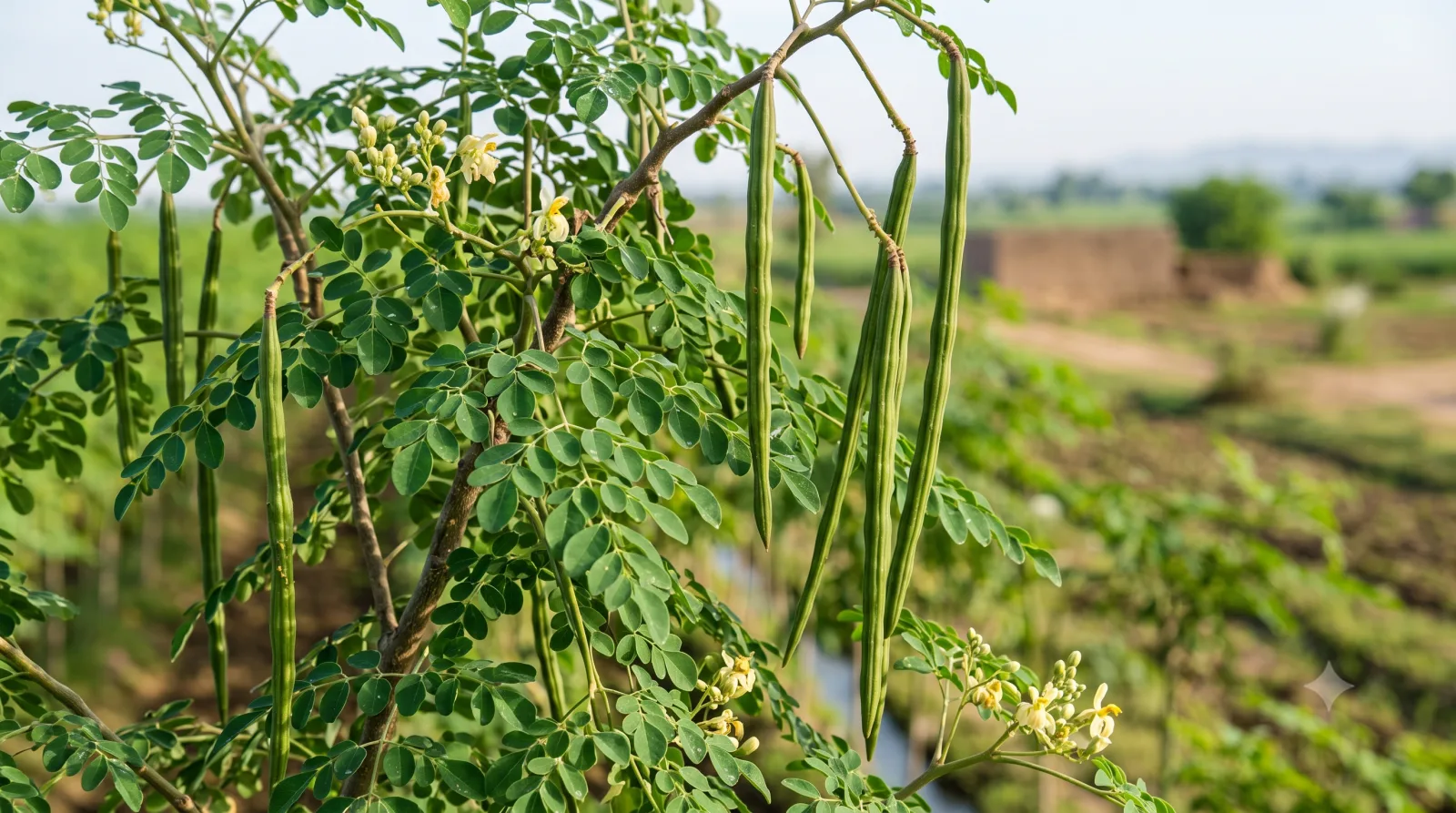
Moringa oleifera is often called the miracle tree because almost every part of it has value. The leaves are a nutrient rich superfood, the seeds press into a fine cosmetic and cooking oil, and the pods, the long drumsticks, are eaten as a vegetable. Demand for moringa powder and oil has grown fast in Pakistan and for export, driven by the health and natural products market.
For an investor, the appeal is simple. Moringa pays early. Where a timber tree ties up your land for a decade, moringa can generate income from its first year and keep producing for years, while you decide separately whether to also plant slower, high value timber alongside it.
How Long Until It Pays: The Timeline
| Stage | When | What happens |
|---|---|---|
| Planting to first leaf harvest | 6 to 8 months | First cuttings of leaves become possible |
| Year 1 | First year | Early leaf harvests begin, plant establishes |
| Year 2 | Second year | Steady leaf harvests plus first real pod crop, about 300 pods per tree |
| Year 3 onward | Third year and beyond | Full production, a healthy tree can carry 400 to 1,000 or more pods, with several leaf cuttings a year |
Leaves can be cut several times per year once the plant is established, which is what makes moringa a repeating, early income crop rather than a one time harvest.
What Moringa Produces: The Income Streams
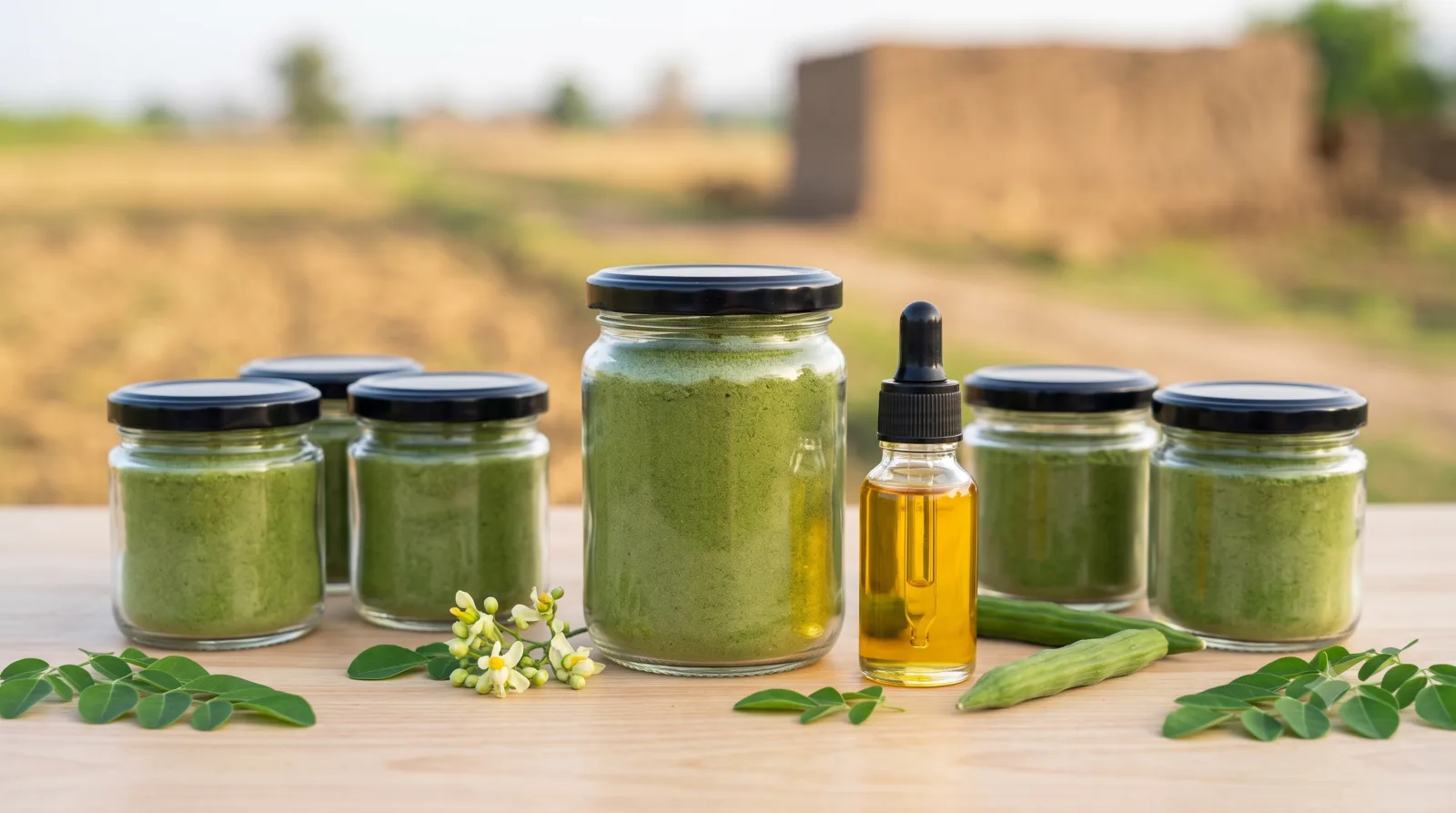
- Leaves and leaf powder. The biggest opportunity. Fresh leaves are dried and ground into moringa powder, a superfood sold for health and nutrition. This is where value addition matters most.
- Seed oil (ben oil). Pressed from the seeds, moringa oil is a premium cosmetic and hair oil, and also used in cooking and health products.
- Seeds and pods. Seeds are sold for oil, replanting and export. Fresh pods are sold as a vegetable in local markets.
- Fodder and by products. Leaves and stems make excellent high protein livestock fodder, and the leftover seed cake is even used to purify water.
Realistic Income in Pakistan (Honest Numbers)
Be careful with the figures you see online. Many articles quote inflated numbers or Indian rupees. Here is an honest view based on prices reported in the Pakistani market. Treat these as ranges, not promises, because your real return depends on management, value addition and market access.
| Product | Typical price in Pakistan (2026) |
|---|---|
| Moringa leaf powder | About PKR 2,000 to 4,000 per kg (retail, quality dependent) |
| Moringa oil | Premium, roughly PKR 1,100 for 50 ml and up |
| Moringa seeds | About PKR 2,000 to 2,400 per kg in bulk |
The key lesson: selling fresh leaves or pods locally earns modest money, but drying and processing into powder or oil multiplies the value several times. A grower who only sells fresh produce might make a modest amount per acre, while a grower who dries, packs and sells leaf powder can target a much higher return per acre once production is steady from year two or three. Value addition, quality and finding the right buyers are what separate a small return from a strong one.
This is exactly where a managed plantation helps. Processing leaves into clean, well packed powder and reaching real buyers is not easy for an individual investor to do alone.
What Moringa Needs to Grow
- Climate: It is native to this region and thrives in our heat. It tolerates a very wide rainfall range and a broad soil pH. Young plants are sensitive to frost, so establishment timing matters.
- Water: Low. Moringa is drought resistant and needs only a modest amount of water compared to most crops, which lowers cost and suits drier land.
- Soil: Tolerant of poor and sandy soils, though it does best in well drained soil.
- Spacing: For pods and mixed uses, roughly 1,200 plants per acre is common. For intensive leaf production, growers plant much denser, up to several thousand plants per acre.
- Care: Low maintenance overall, mainly regular cutting to keep the tree productive and bushy.
Pros, Cons and Risks (Honest View)
Advantages
- Fast income, from the first year
- Low water and low maintenance
- Several income streams from one plot
- Rising demand for moringa powder and oil, local and export
- Well suited to Punjab climate
Things to consider
- It is a shorter lived tree, so plantations are renewed over time
- Young plants are frost sensitive
- Fresh leaves are perishable and must be dried or processed quickly
- The best returns need value addition and reliable buyers, not just fresh sale
Is Moringa the Right Tree for You?
Moringa suits an investor who wants earlier and repeating income rather than waiting a decade for a single timber payout. It is a strong choice if your land has limited water, and it pairs well with a longer term timber tree planted alongside it, so you earn from moringa in the early years while the timber matures. If your goal is a single large payout many years out, a high value timber species may suit you better, and many investors choose a mix of both.
How Jungle Dunia Grows Moringa for You
At Jungle Dunia we plant and manage moringa as part of a complete agroforestry plot in District Kasur, and our team handles the hard parts: selecting the right planting plan, growing, harvesting on schedule, and the value addition and market access that turn leaves into real income. Under our model you own the plot and keep 100 percent of the produce from oil, crop and other harvests, with regular progress updates, while our agronomists do the work on the ground.
If you want to know which trees best fit your budget and goals, see our investment plans and our Kasur agroforestry project, or contact us and we will help you choose the right mix for your plot.
Frequently Asked Questions
How many years does moringa take to give income?
Moringa is fast. You can begin harvesting leaves within the first 6 to 8 months, and the tree reaches steady leaf and pod production by year two to three. This is far quicker than timber trees, which take 8 to 12 years.
How much money can moringa make per acre in Pakistan?
It depends heavily on value addition. Selling fresh leaves or pods earns a modest amount, but drying leaves into powder, which retails around PKR 2,000 to 4,000 per kg, or pressing seed oil multiplies the value several times. Treat any single figure with caution and plan for value addition and good buyers.
Does moringa need a lot of water?
No. Moringa is drought resistant and needs relatively little water, which makes it a low cost, lower risk choice for drier land in Punjab.
What products come from moringa?
Leaves and leaf powder, seed oil, seeds and pods, and high protein livestock fodder. One plot earns from several products at once.
How long does a moringa tree live and produce?
It is a fast growing but shorter lived tree, so plantations are renewed over time rather than lasting for decades like some timber trees.
Can I grow moringa with other trees?
Yes, and many investors do. Moringa gives early income while a slower, high value timber tree planted alongside it matures, so the plot earns in both the short and long term.
Disclaimer: This guide is general information based on cultivation research and current market prices in Pakistan in 2026. Yields, prices and returns are estimates that vary with soil, climate, management, value addition and market conditions. They are not guaranteed. Speak to our team for a plan suited to your specific plot.