
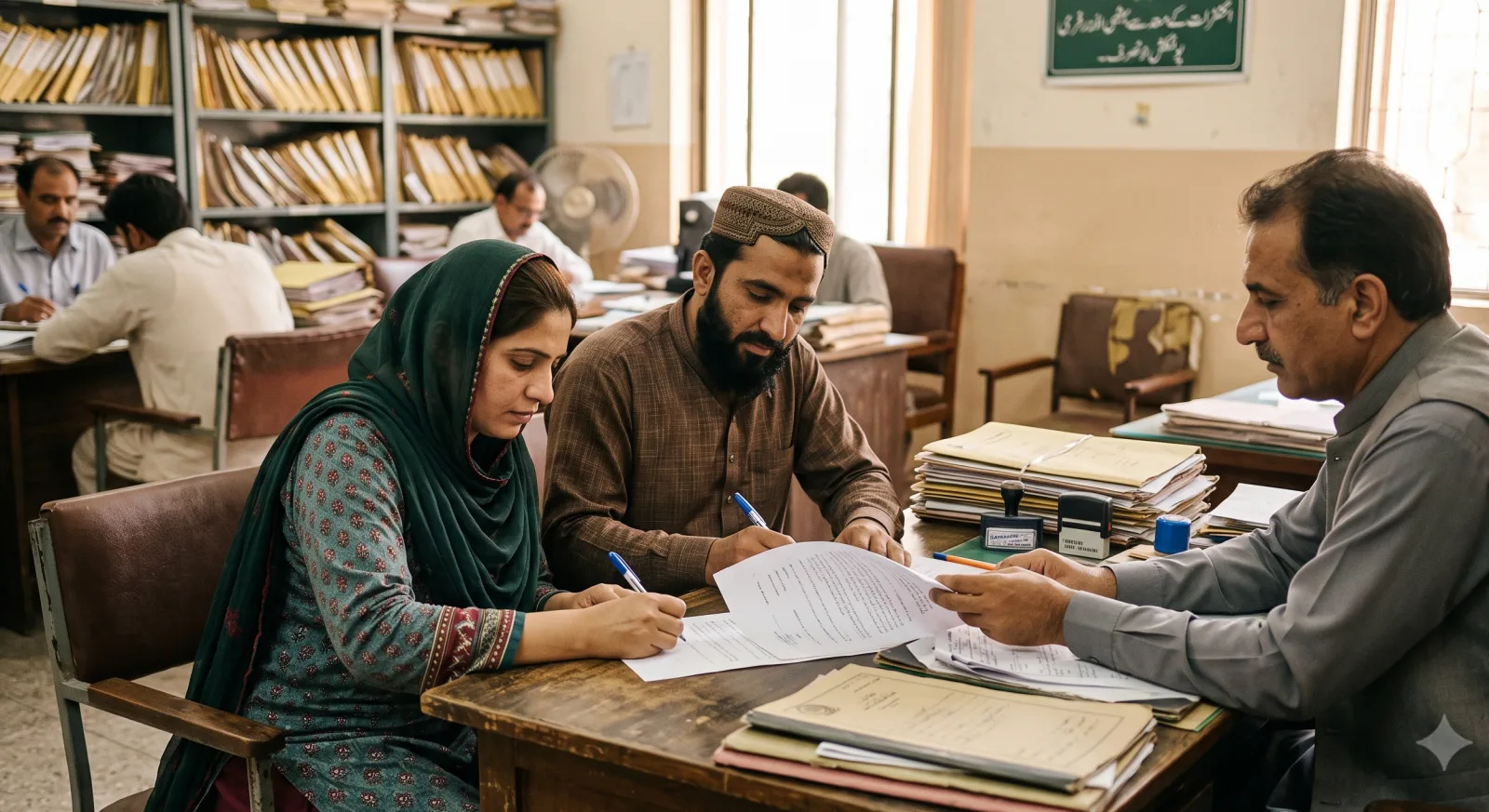
Many people in Pakistan believe that once the registry is done, the land is theirs. That belief has cost buyers a lot of money. The truth is simple. A Registry is the registered sale deed that proves a sale took place. An Intiqal, also called mutation, is the entry that updates the official land record and puts the land in your name. You are not the complete legal owner until both are done. This guide explains each one in plain language, the 2026 fees, and an important new rule in Punjab that has changed how mutations work.
Key Takeaways
- Registry is the registered sale deed, signed and stamped at the Sub Registrar or Arazi Record Center, that records the sale.
- Intiqal (mutation) is the update of the government land record that transfers ownership into the buyer’s name.
- You need both. A registry without a mutation leaves your name missing from the actual land record.
- Since April 2026, Punjab charges a uniform 1 percent stamp duty on immovable property in both urban and rural areas. The Nation
- Since January 2026, Punjab has ended oral (zabani) mutations. Every mutation must now be backed by a registered document. Source
What Is a Registry (Sale Deed)?
A Registry is the legal contract of sale. When a buyer and seller agree on a price, they record the sale in a formal deed, which is then registered with the government. In Punjab this happens at the Sub Registrar office or, increasingly, at the Arazi Record Center.
At the time of registry you pay the government charges, mainly the stamp duty and the registration fee. The registered deed is powerful evidence that the sale happened, on a specific date, for a specific price, between specific people. But here is the catch that traps many buyers. The registry proves the transaction. It does not, by itself, change the official ownership record of the land.
What Is an Intiqal (Mutation)?
Intiqal, or mutation, is the step that actually updates the land record. After the sale, the revenue system enters the change so that the land now stands recorded in the buyer’s name. This is done in the government register that villages and cities rely on, and it is what a future buyer, bank, or court will check.
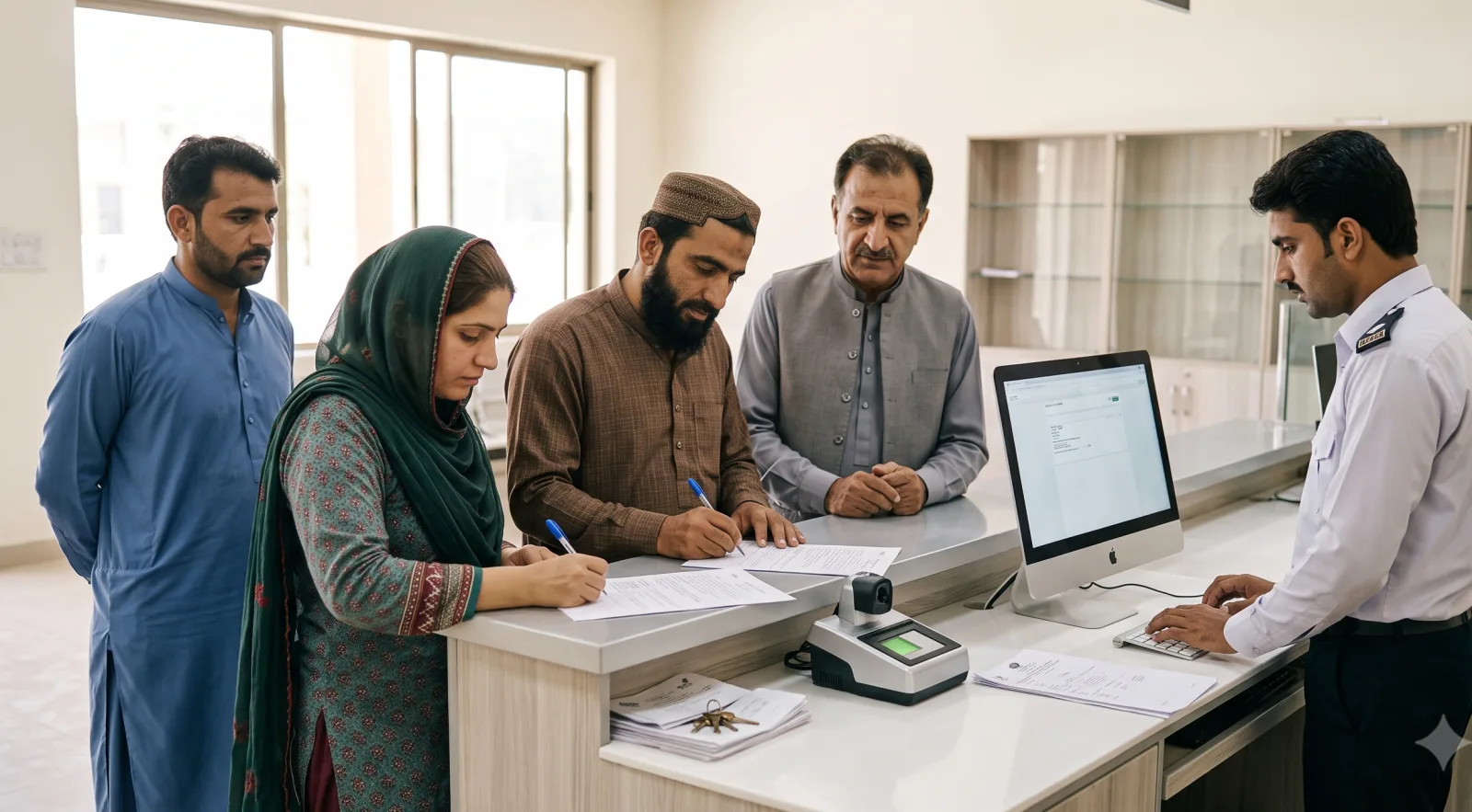
In Punjab the mutation is handled at the Arazi Record Center. The process begins at the reception counter, where your CNIC, photograph, and biometric are verified and you receive a token. You then present the ownership documents, and the mutation is entered in the system. If the buyer, seller, and witnesses attend together, the mutation can often be completed in a single visit. Source
Until the mutation is recorded in your name, the official record still shows the old owner, no matter how much you have paid or how complete your registry is.
Registry vs Intiqal: The Key Difference
| Registry (Sale Deed) | Intiqal (Mutation) | |
|---|---|---|
| What it is | The registered contract of sale | The update of the official land record |
| What it proves | That a sale took place | That the land is now in your name |
| Where it is done | Sub Registrar or Arazi Record Center | Arazi Record Center (revenue record) |
| When | At the time of purchase | After the registry |
| If you skip it | No legal proof of the sale | Your name never enters the land record |
The simplest way to remember it: the registry is the proof of the deal, and the intiqal is the proof of ownership. One without the other leaves your position weak.
The 2026 Rule That Changed Mutations in Punjab
This is the most important recent update, and it protects buyers. Since January 2026, the Punjab Land Records Authority and the Board of Revenue have ended oral or verbal mutations, known as zabani intiqal. Under the new policy, every mutation must be based on a registered document. Source
For years, informal verbal transfers were a common source of fraud and endless family disputes. By requiring a registered document behind every mutation, the system now creates a clear paper trail. For an honest buyer this is good news, because it makes ownership harder to challenge later.
What It Costs in 2026
Costs change with government notifications, so always confirm the current figures at the time of your purchase. As a guide, here are the 2026 rates in Punjab:
- Stamp duty: a uniform 1 percent of the property value, applied in both urban and rural areas since the Punjab Stamp (Amendment) Ordinance 2026 in April 2026. The Nation
- Intiqal (mutation) fee: fixed at Rs 1,200 for standard mutation services. Source
- Mutation processed through a bank: carries a service charge of Rs 2,100. Source
- Fard (land record copy): Rs 900 for a standard copy, and Rs 4,000 for an express copy that includes fard, intiqal, and girdawari. Source
On top of these provincial charges, there are federal advance taxes on the transaction, and the 2026 budget brought real relief here, especially if you are a tax filer. Under the Finance Act 2026, effective July 1, 2026, the old slab based rates were converted into simple flat rates for people on the Active Taxpayer List:
- Buyer advance tax (Section 236K): a flat 1.25 percent for filers, with much higher rates for non-filers. FBR
- Seller advance tax (Section 236C): a flat 2.75 percent for filers, again far higher for non-filers. FBR
- Federal Excise Duty on property transfer: removed. The FED that once ran from 3 to 7 percent on property transfers was abolished from July 1, 2025. Dawn
The message is clear: being a tax filer now saves you a large amount on every property deal, so it pays to be on the Active Taxpayer List before you buy or sell. A registered company or a good property lawyer can confirm the exact amounts for your case.
Where the Green Property Certificate Fits
Punjab is moving from the old handwritten Fard to the digital Green Property Certificate. This does not remove the need for a registry and a mutation. It changes the ownership document you will rely on. The Fard is valid for property transactions. The Green Property Certificate was made mandatory on July 1, 2026, but the PLRA withdrew that requirement around July 11, 2026, so it is now optional.
In practice, you will still complete your registry and mutation, and the ownership record itself will move to the Green Property Certificate format. We explain the new certificate fully in our complete guide to the Green Property Certificate, and you can read what the old record contains in our guide to Fard-e-Malkiat.
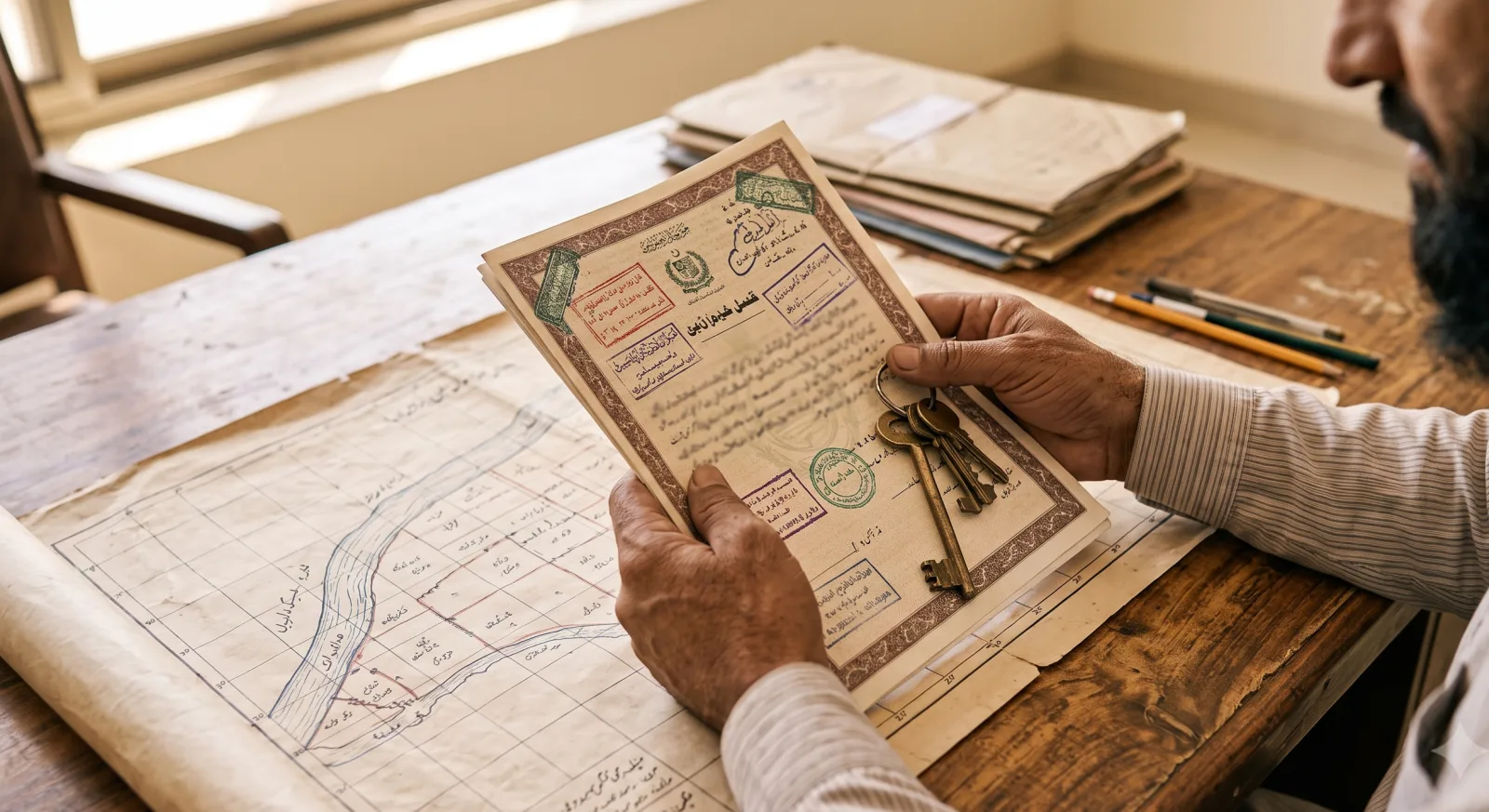
At Jungle Dunia, every property comes with a clean, verified record, and our team completes the registry and mutation with you so your name is properly recorded. If you want to invest in verified agroforestry land near Lahore and Kasur, talk to us on WhatsApp or browse our available properties. You can also read our full guide on how to buy agricultural land in Pakistan.
Frequently Asked Questions
What is the difference between registry and intiqal?
Registry is the registered sale deed that proves a sale took place. Intiqal, or mutation, is the update of the official land record that puts the land in the buyer’s name. You need both to become the complete legal owner.
Am I the owner after registry?
Not fully. The registry proves the sale, but the land record still shows the previous owner until the mutation is recorded in your name. Always complete the intiqal after the registry.
How much is the mutation fee in Punjab in 2026?
The intiqal fee is fixed at Rs 1,200 for standard services, while a mutation processed through a bank carries a service charge of Rs 2,100, according to the 2026 land record fee notification.
Is oral mutation still allowed in Punjab?
No. Since January 2026, oral or verbal mutations have been ended in Punjab. Every mutation must now be based on a registered document, which reduces fraud and disputes.
Does the Green Property Certificate replace the registry and mutation?
No. You still complete the registry and mutation. The Green Property Certificate replaces the Fard as the ownership record. The Fard is valid, and the certificate is optional since the PLRA withdrew the mandatory requirement around July 11, 2026.